The History of Bad Wörishofen – From Monastery to Kneipp Town
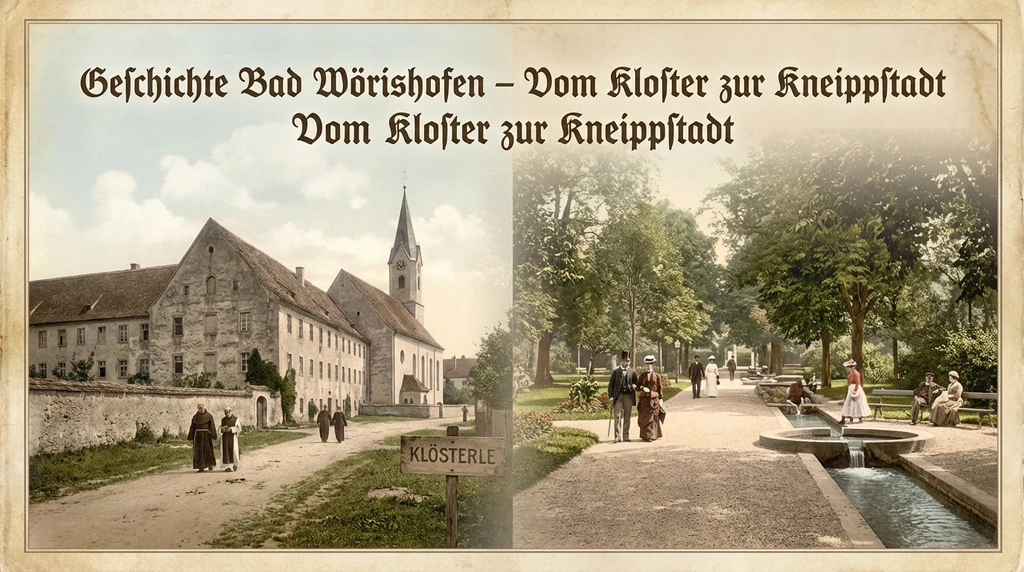
The history of Bad Wörishofen spans from a medieval monastery to a modern Kneipp town. The town became famous primarily through Pastor Sebastian Kneipp, who worked in Wörishofen starting in 1855 and attracted visitors from all over the world with his hydrotherapy treatments. Thanks to Kneipp’s success, the tranquil village transformed into a thriving spa town: in 1920, Wörishofen was granted the designation “Bad,” and in 1949, it was elevated to city status.
Wörishofen before Kneipp: Monastery and Village History
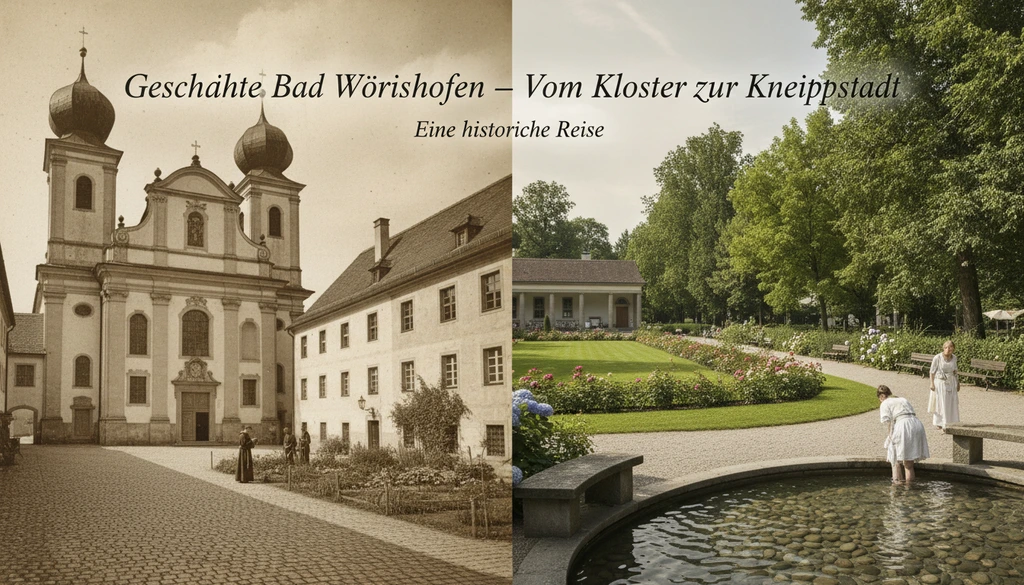
Wörishofen was first mentioned in a document in 1067 as the estate “Werenshova.” The place name roughly translates to “near the farms of Werin” and refers to an early noble estate. In 1243, the widow Christina von Fronhofen bequeathed her property in Wörishofen to the Dominican Order—laying the foundation for the establishment of the convent. The Dominican convent in Wörishofen was built between 1719 and 1721 under the direction of master builder Franz Beer. For centuries, Wörishofen remained a quiet, agricultural village in the Allgäu region, growing around the convent and St. Justina Church. It was not until the late 19th century that the leisurely pace of life in the village changed fundamentally.
Sebastian Kneipp: Life and Work in Wörishofen

Sebastian Kneipp arrived in Wörishofen on May 2, 1855, and took up his post as confessor at the local Dominican convent. The young priest had previously discovered the healing power of water after curing himself of tuberculosis and had developed his own hydrotherapy method. In Wörishofen, Kneipp began treating the sick with his water therapies. The number of people seeking help grew steadily, and word of his success spread quickly: as early as the 1870s and 1880s, more and more patients from all over Germany and Europe traveled to Wörishofen to be treated by Kneipp. Within a few decades, the sleepy farming village transformed into a bustling spa town, as Kneipp treated thousands of patients from all walks of life on site. Hotels, guesthouses, and inns opened to accommodate the spa guests. In 1881, Kneipp also took on the role of pastor of the St. Justina parish, and his fame continued to grow in the years that followed. In 1886, he published his book *My Water Cure*, followed in 1889 by *This Is How You Should Live!*—bestsellers that cemented Kneipp’s reputation as a natural healer throughout Europe.
TIP: If you visit Bad Wörishofen, be sure to check out the Sebastian Kneipp Museum at the Dominican Convent. There, you can learn more about Kneipp’s life, his work in the town, and the history of naturopathy.
Summary:
Sebastian Kneipp’s work transformed Bad Wörishofen from an obscure farming village into an internationally renowned health resort. Without Kneipp’s pioneering contributions to naturopathy, Wörishofen would likely never have achieved its status as a Kneipp spa and, ultimately, as a town.
Did you know?
In 1975, Bad Wörishofen recorded around 1.44 million overnight stays—a historic high for the spa town.
From Health Resort to “Spa”: The Rise of the Kneipp Town of Wörishofen
Even during Kneipp’s lifetime, Wörishofen had already acquired the unofficial status of a Kneipp health resort. In December 1890, Kneipp’s followers founded the first Kneipp Association, and the municipal council approved the organized spa operations. In those years, up to 6,000 spa guests came to Wörishofen in the summer. Kneipp insisted that even destitute patients be treated free of charge and emphasized a charitable approach to the spa system. After more than 40 years of work in Wörishofen, Sebastian Kneipp died there on June 17, 1897. Subsequently, the number of spa guests initially declined. However, dedicated local citizens and doctors kept Kneipp’s legacy alive and ensured that the spa town could continue to exist.
How did Bad Wörishofen become a spa town?
Kneipp’s successful treatments had effectively turned Wörishofen into a spa town as early as 1890. After World War I, the municipality recognized its opportunity and applied for state recognition as a health resort. On March 6, 1920, the moment had arrived: The Bavarian Ministry of the Interior officially granted Wörishofen the designation “Bad,” making the town a recognized Kneipp spa. In 1949, Bad Wörishofen was finally granted city status—thus, Wörishofen was not only a spa town but was also formally granted city rights. Incidentally, Bad Wörishofen is still considered the “Kneipp original” today—it was here that the world-famous natural healing method was founded, which is now practiced in many places.
Bad Wörishofen in the 20th Century: The Spa Boom and Modernization
After 1920, the Kneipp spa town continued to flourish. In the 1920s and 1930s, tens of thousands of guests traveled there each year for spa treatments. During World War II, however, spa operations had to be suspended; many spa clinics and hotels were used as military hospitals. Immediately after the war ended, Bad Wörishofen temporarily served as a refugee camp for displaced persons, but by the 1950s, spa tourism was regaining its importance. In 1949, Bad Wörishofen also became the first town to be officially designated a Kneipp spa. In the following decades, visitor numbers rose rapidly: by 1955, there were already around 39,000 spa guests with 719,000 overnight stays, and by 1975, the number had grown to 69,000 guests with 1.44 million overnight stays. Bad Wörishofen thus developed into one of Germany’s leading spa resorts.
1. Founding of a medieval monastery (1243)
↓
2. Kneipp’s work (from 1855) – Rise to a spa town
↓
3. Official recognition: Spa town (1920) & City (1949)
Key milestones in the history of Bad Wörishofen
| Year | Event | Significance |
|---|---|---|
| 1067 | First mention of “Werenshova” (Wörishofen) | Oldest documented record of the town |
| 1243 | Handover of Wörishofen to the Dominican Order | Foundation stone for the establishment of the monastery in Wörishofen |
| 1855 | Sebastian Kneipp becomes confessor at the monastery | Beginning of Kneipp’s work in the town; start of the Kneipp cure |
| 1890 | Wörishofen declares itself a Kneipp spa town | First Kneipp association founded; spa treatments attract thousands of guests |
| 1920 | Awarded the title “Bad” | Official recognition as a spa town |
| 1949 | Granted city status (city rights) | Bad Wörishofen becomes Germany’s first Kneipp spa town |
The Significance of Kneipp’s Teachings for Bad Wörishofen and Their International Recognition
- Kneipp-Original Bad Wörishofen: The town is considered the birthplace of the world-renowned Kneipp method of natural healing
- Since 2015, Kneipp’s health teachings have been officially recognized as part of Germany’s intangible cultural heritage (German UNESCO Commission)
- Kneipp’s therapeutic concept is based on five elements (water, exercise, nutrition, herbs, and balance), which are still practiced in Bad Wörishofen today
Historical development of Bad Wörishofen from the founding of the monastery to a spa town
1. Founding of the monastery (1243)
2. Kneipp’s work beginning in 1855
3. Designation as a spa town in 1920 & elevation to city status in 1949
Conclusion
In conclusion, it is clear that the history of Bad Wörishofen is inextricably linked to Sebastian Kneipp. Without Kneipp’s work, the small village of Wörishofen would likely never have become a spa town of national significance. To this day, Kneipp’s teachings and legacy shape the town—from traditional spa treatments to its international reputation as a health center. Visit Bad Wörishofen yourself and experience Kneipp’s history firsthand—for example, at the Kneipp Museum or during an authentic Kneipp cure at the modern spa resort.
Sources
-
Bad Wörishofen Spa and Tourism Office – History of Bad Wörishofen (PDF document)
-
Allgäuer Zeitung (Holger Mock): 100 Years of “Bad”: Kneipp Town of Wörishofen Celebrates Anniversary, March 6, 2020
-
Wikipedia: Bad Wörishofen – History
-
Kneipp-Bund e.V.: History of Sebastian Kneipp
-
Kneipp.com (Press Release): Kneipp Therapy Becomes Cultural Heritage, December 23, 2015

