Bad Wörishofen: Town or village? – Town rights & population at a glance
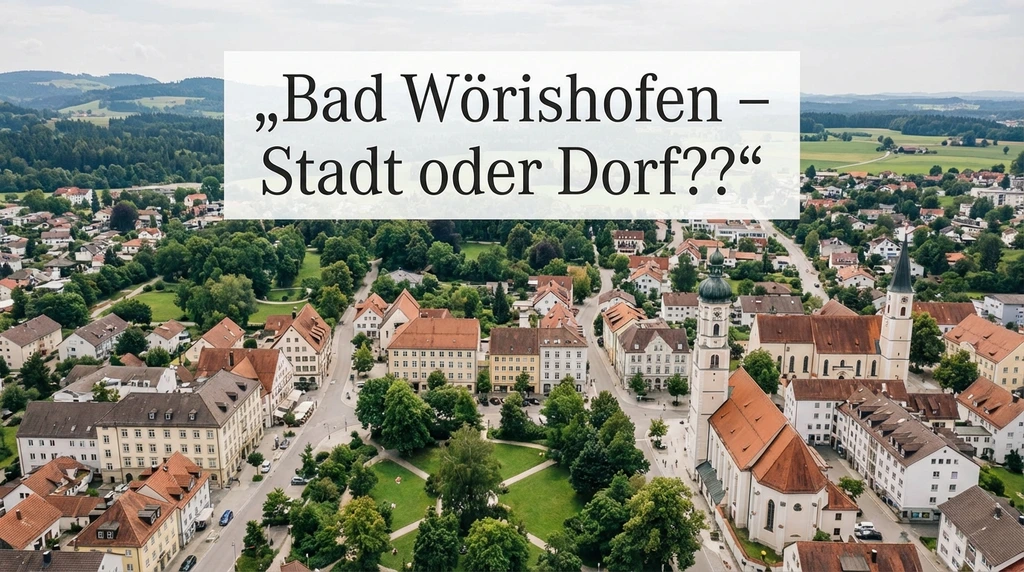
Bad Wörishofen is a town , not a village. Nevertheless, many people wonder: Is Bad Wörishofen a town or a village? In fact, this Kneipp spa town in the Unterallgäu region has held official town status since 1949 and can therefore be called a town. Before 1949, Bad Wörishofen was a municipality without town status. Since being granted town status, the town has developed steadily and today has almost 18,000 inhabitants ( as of the end of 2023; source: Wikipedia ) – enough to stand out as the largest town in the Unterallgäu district. This article examines Bad Wörishofen’s town status, the historical background of its elevation to town status, and provides current population figures for context.
Bad Wörishofen’s status as a city or village?
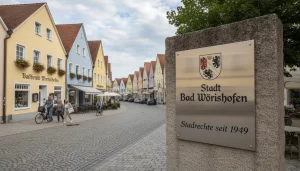
From an administrative perspective, Bad Wörishofen is a town, not a village . In Germany, “village” is not an official administrative category – places without town charter are usually considered municipalities or market towns. Bad Wörishofen received its town charter from the Bavarian State Ministry on April 14, 1949 ( source: City of Bad Wörishofen ) and has held the title of town ever since. Does Bad Wörishofen have town charter? Yes , this question can be answered unequivocally: Bad Wörishofen was elevated to town status in 1949 ( source: Wikipedia ). This entailed an upgrade of the administrative unit and the right to elect a town council and a mayor (or first mayor). For centuries prior, the town had merely been a rural municipality. The question “Is Bad Wörishofen a village?” can therefore be answered in the negative – Bad Wörishofen has officially held town status for over 70 years.
Historical background: from spa town to city
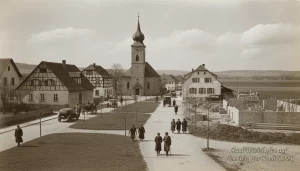
Why was Bad Wörishofen granted city status in 1949? A key reason lies in its development as a spa town . As early as March 6, 1920, Wörishofen was awarded the title “Bad” (meaning “spa”) and thus became a recognized Kneipp health resort ( source: City of Bad Wörishofen ). This title was bestowed because Father Sebastian Kneipp had made the town famous in the 19th century with his water cure treatments. In the following decades, the spa town gained supra-regional importance, leading to strong growth in spa guests and infrastructure. After the Second World War, Bad Wörishofen, including many refugees, already had over 9,000 inhabitants. The Bavarian government took this development into account and granted Bad Wörishofen city rights in 1949. Since then, the spa town of Bad Wörishofen has officially been entitled to call itself a “city.” At the same time, in 1949, it became the first Kneipp health resort to be granted city status. The granting of city status marked the transformation from a rural community to an urban municipality with expanded self-governing rights. Despite the new designation, Bad Wörishofen retained its cozy character – it remains a manageable spa town, but now with official city status.
Population: How many inhabitants does Bad Wörishofen have?
Bad Wörishofen currently has just under 18,000 inhabitants . Specifically, at the end of 2023, there were around 17,700 residents ( as of December 31, 2023; source: Wikipedia ). By the end of 2024, the population had risen further to approximately 18,336 ( source: City of Bad Wörishofen, 2024 statistics ). These figures illustrate that Bad Wörishofen is rather small for a town, but by no means a village. For comparison, the district capital, Mindelheim, had 16,226 inhabitants at the end of 2023 ( as of December 31, 2023; source: City of Mindelheim ). Bad Wörishofen thus even surpasses the population of the administrative center and is the largest town in the Unterallgäu district . Within the district, Bad Wörishofen therefore occupies a special position. In recent decades, the population has grown steadily, not least thanks to its excellent reputation as a spa and health resort . The population consists largely of senior citizens and retired spa guests, but families and working people also appreciate the town’s high recreational value. Despite the increasing population, Bad Wörishofen retains the charm of a tranquil spa town, which makes it attractive to both residents and visitors.
Tip: How can you tell if a place is a town or a village? In Bavaria, the title “town” is officially granted by the awarding of town privileges . A glance at the town sign often helps – if it says “Stadt Bad Wörishofen,” the town status is clear. The population can also be a clue: places with significantly more than 10,000 inhabitants are usually towns. If in doubt, the local council can provide information about the official status.
In short: Bad Wörishofen is not a village , but has been officially a town since 1949. With almost 18,000 inhabitants (as of 2024), it is even the most populous municipality in the Unterallgäu region. Its town status underscores the importance of this spa town.
Fact: Bad Wörishofen has been entitled to use the prefix “Bad” (meaning “spa”) since 1920 – this title is awarded to spa towns as a mark of quality ( source: City of Bad Wörishofen ). The combination of spa town designation and city rights makes Bad Wörishofen unique in the region.

